Overview
Stream is a digital service streamlining the Washington State Ferry pre-boarding and ticketing process for 17+ million passengers. I co-led user research and design efforts, and took ownership of the end-to-end design of a feature that allow users to customize their wait time while using the ferry system.
Role
UX Designer & Researcher
Conducted user research with two user populations. Ideated design solutions and mapped user journey. Led design for an entire product feature, determined information architecture and created low to high fidelity wireframes. Curated visual identify and created design system.
Team
Myself, 3 UX Designers
Timeline
6 months
Context
Washington State Ferries runs the largest ferry system in the United States, but passengers don't feel that they can rely on it to provide accurate information and efficient trips
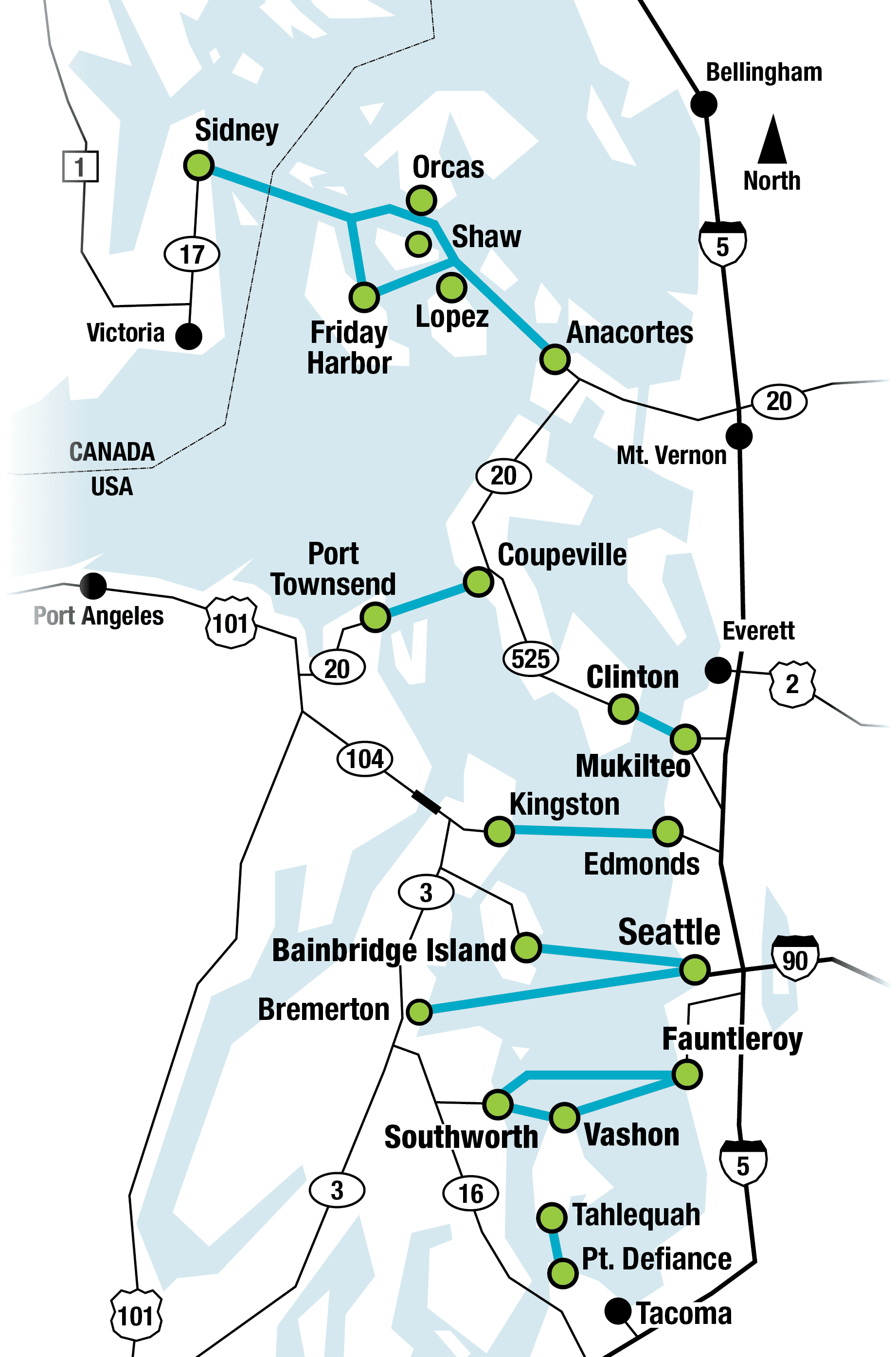
Washington State Ferries (WSF) is the largest ferry operator in the United States, with 10 lines across the Puget Sound and over 17 million yearly ridership. Nearly 14 million riders yearly drive their car onto the ferries.
However, passengers have continually expressed their dissatisfaction with WSF to provide accurate information to guide them through their trips.
Generative Research
To understand how WSF fits into the daily lives of ferry riders, we used various research methods
Literature reviews
Development of WSF
Proposed solutions
Projected future usage
Customer satisfaction
5 SME interviews
How they operate within WSF
Interactions with passengers
11 passenger interviews
Daily trips
Common problems and mishaps
In field research
Observing passengers while they wait
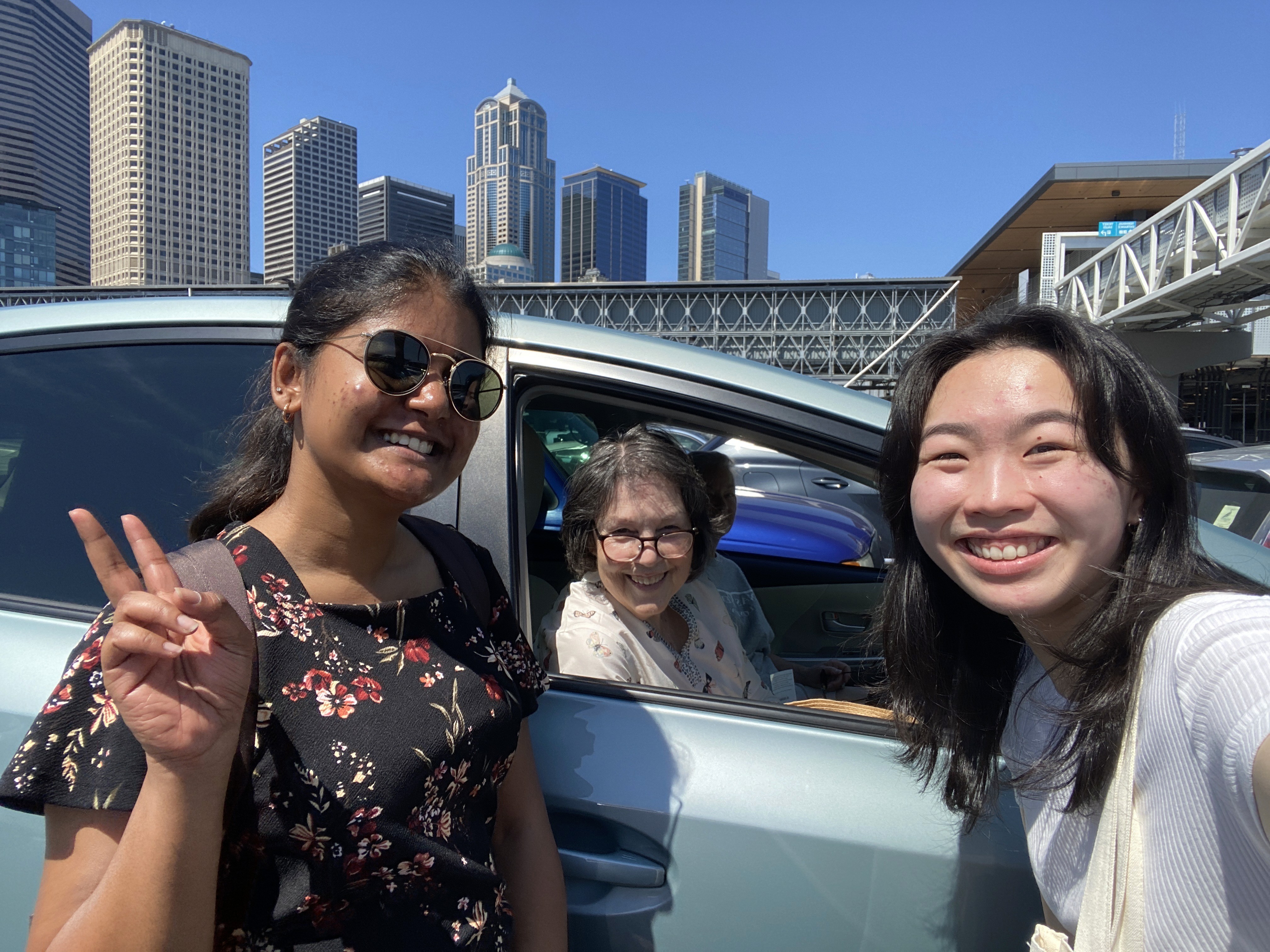
Talking to passengers in their cars about their trips
What we learned from our research:
WSF provides different forms of information regarding the ferry schedule, but leaves it upon passengers to piece them together.
Passengers find the data on remaining car spots unreliable as it is often inaccurate or slow to update.
The car functions as a personal space for passengers to pass the time.
Waiting in the car can be a physically and mentally taxing experience.
Design
To keep user needs at the forefront of our design process, we formed design principles to guide us
Intentional information delivery
Delivering the right information at the right time.
Seamless access
Integrate across devices for convenient accessing.
Communicate reliability
Freeing passengers from dwelling on logistics and allowing them to focus on their trip.
Support versatile living
Providing customizability to allow users to comfortably complete their tasks.
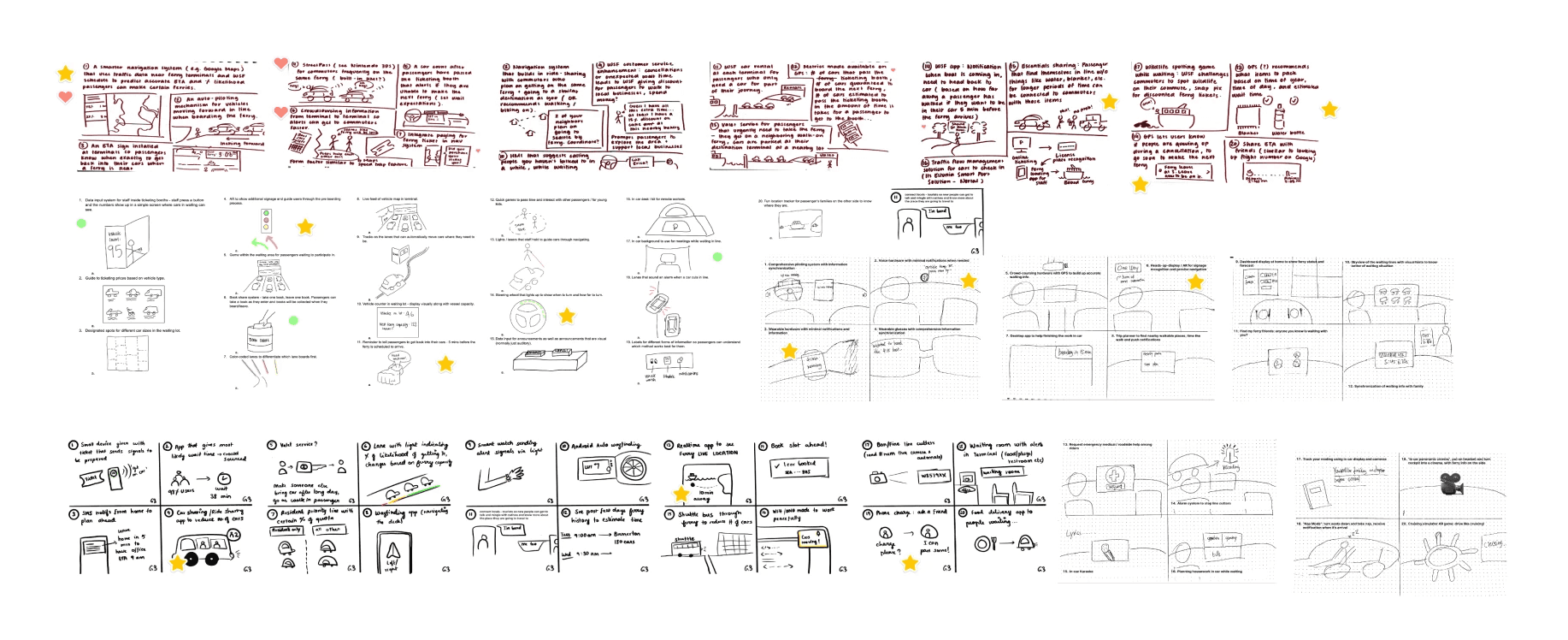
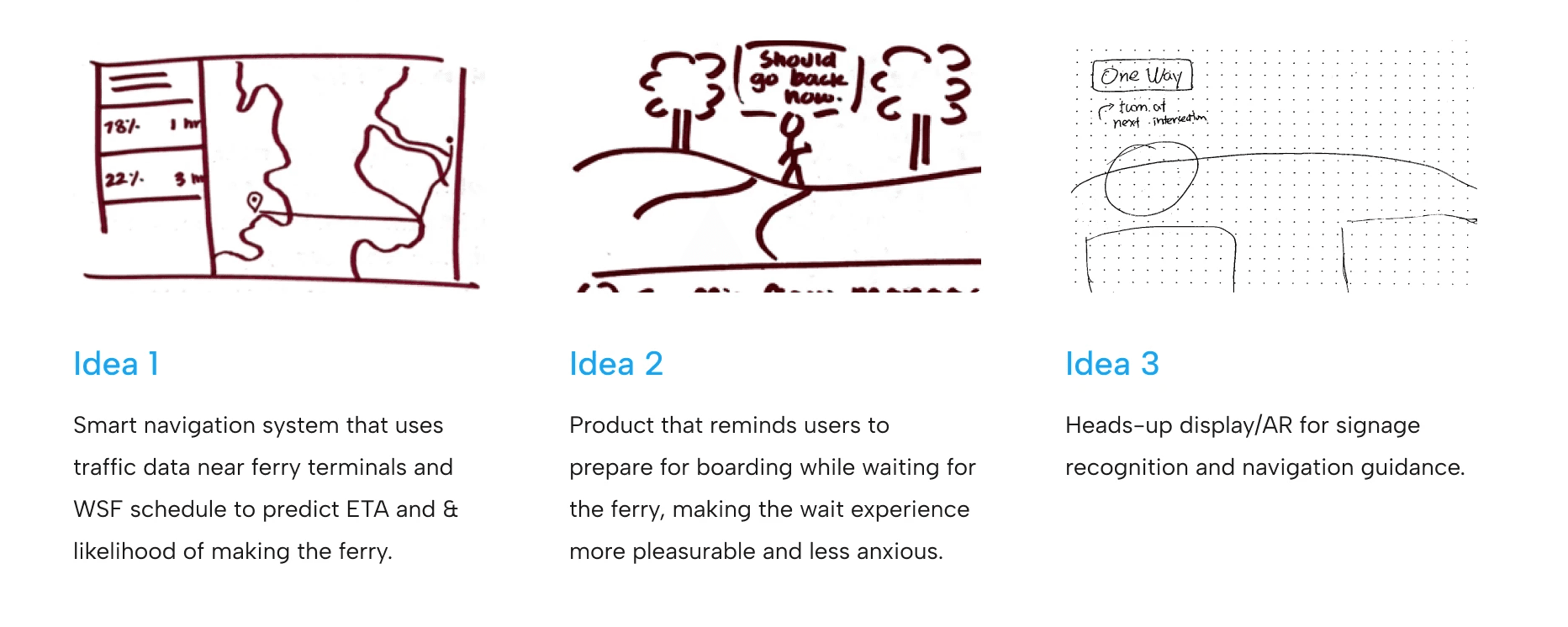
Throughout the ideation process, I sketched ideas and utilized our research and design principles to determine our solution
Our initial idea combined our top 3 ideas into something we called “ferry mode”, which retrospectively was a less developed version of Stream.
We landed on Stream - a digital service which would revamp the ticketing and pre-boarding process for drive on passengers of WSF
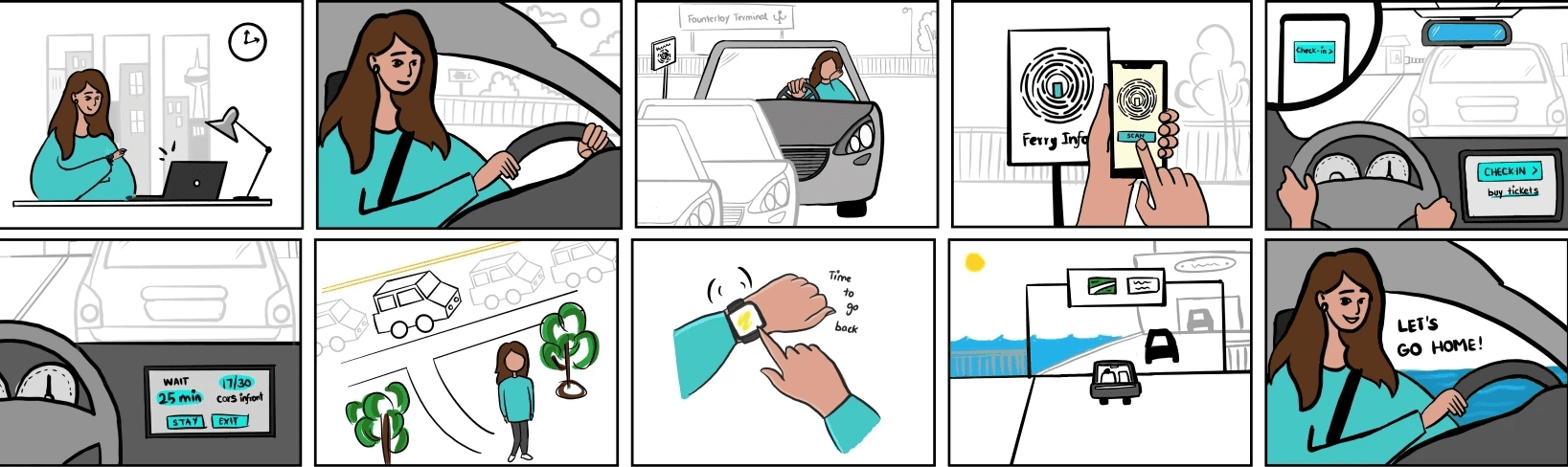
To document the full journey of a WSF drive on passenger and visualize the timing of notifications, the check in process, and the physical environment of waiting in line, we created a storyboard.
Feature
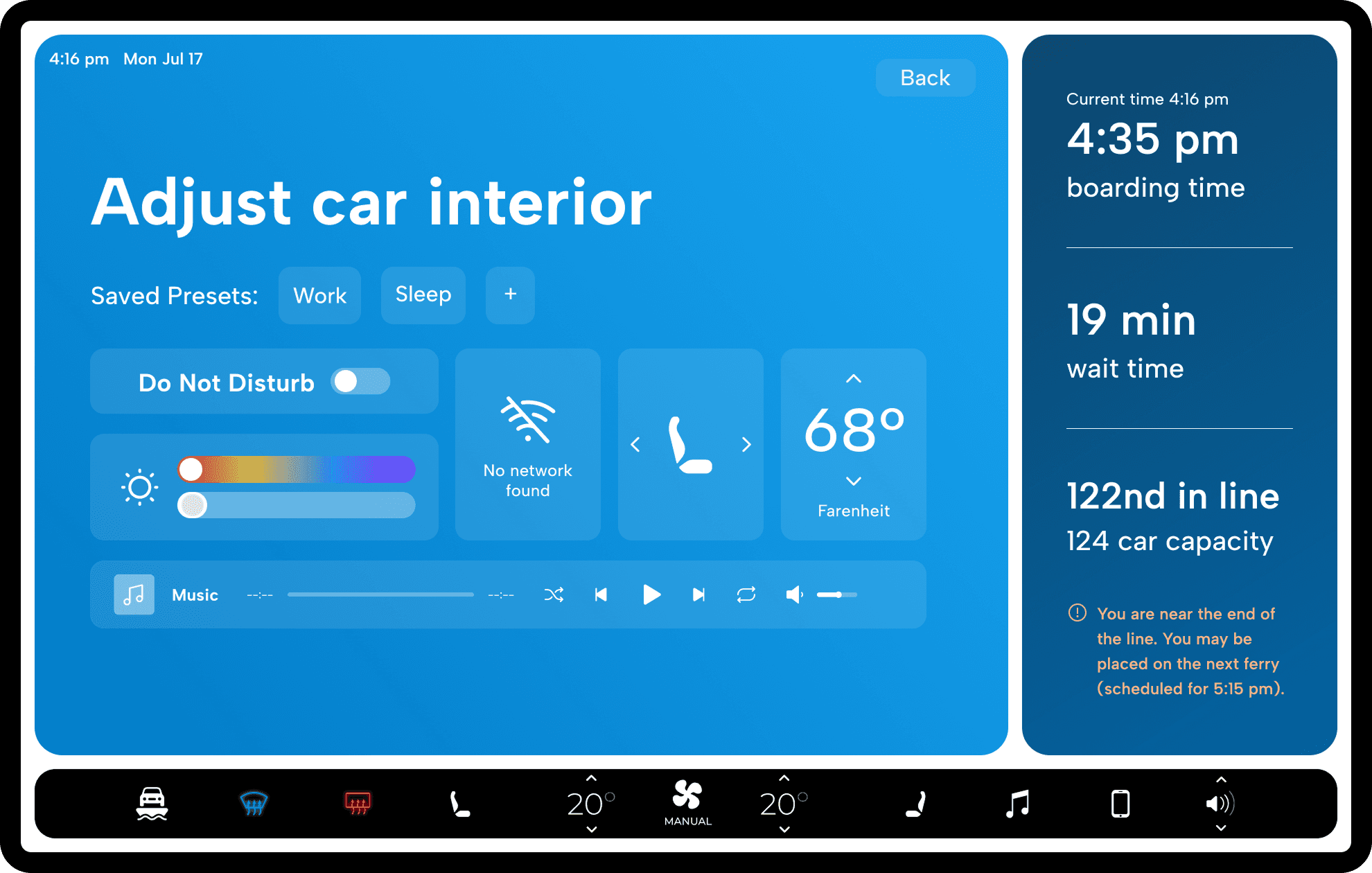
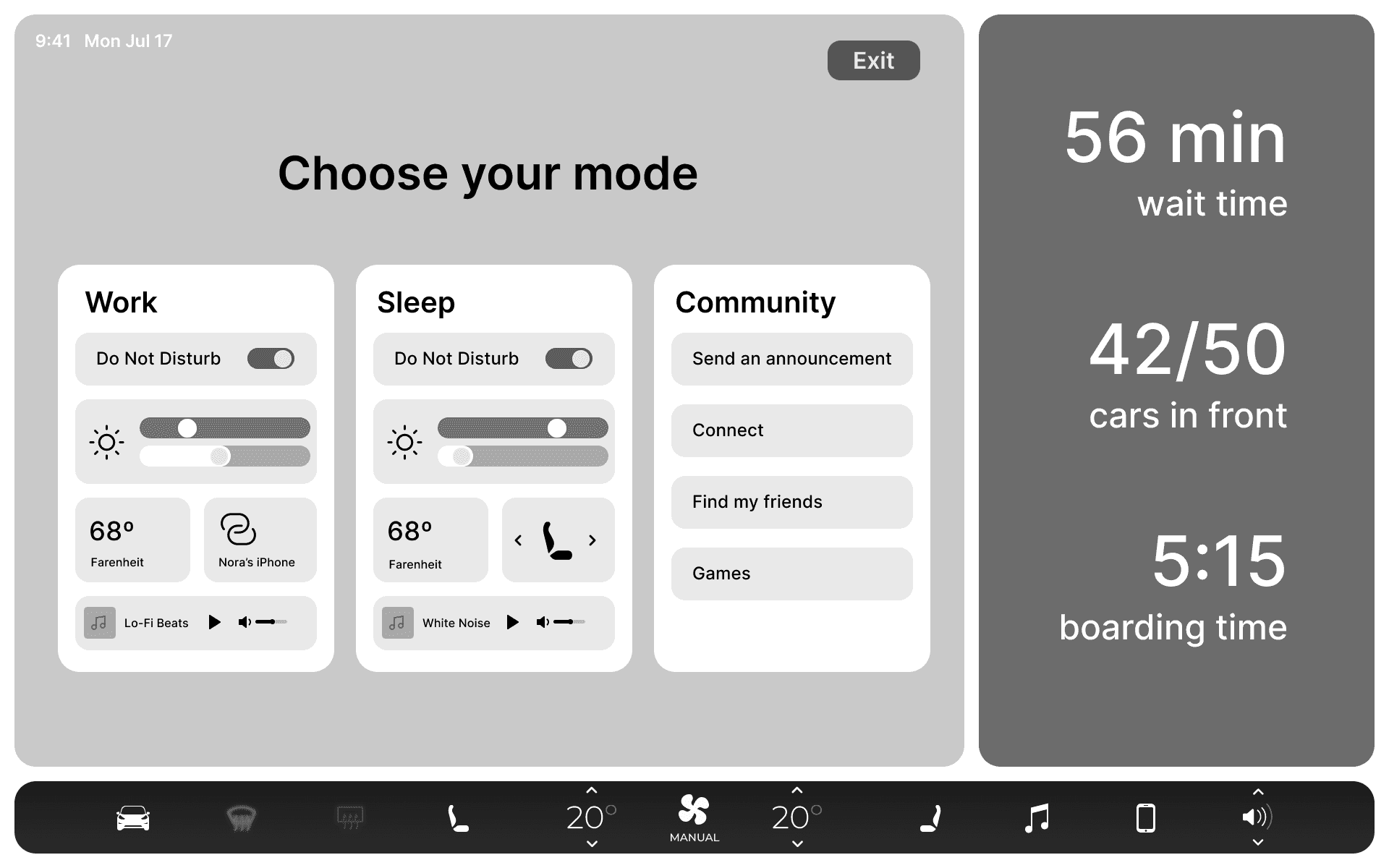
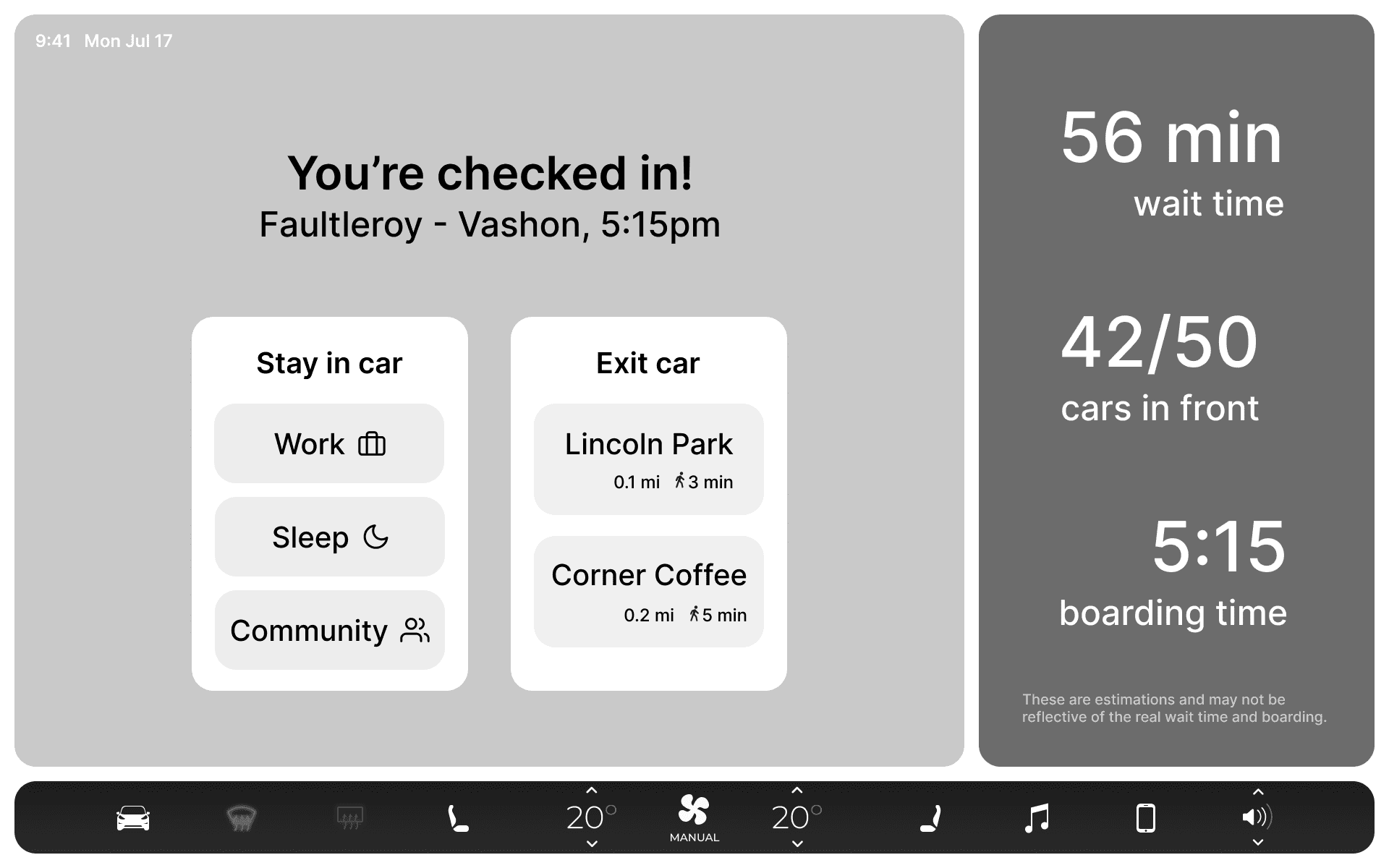
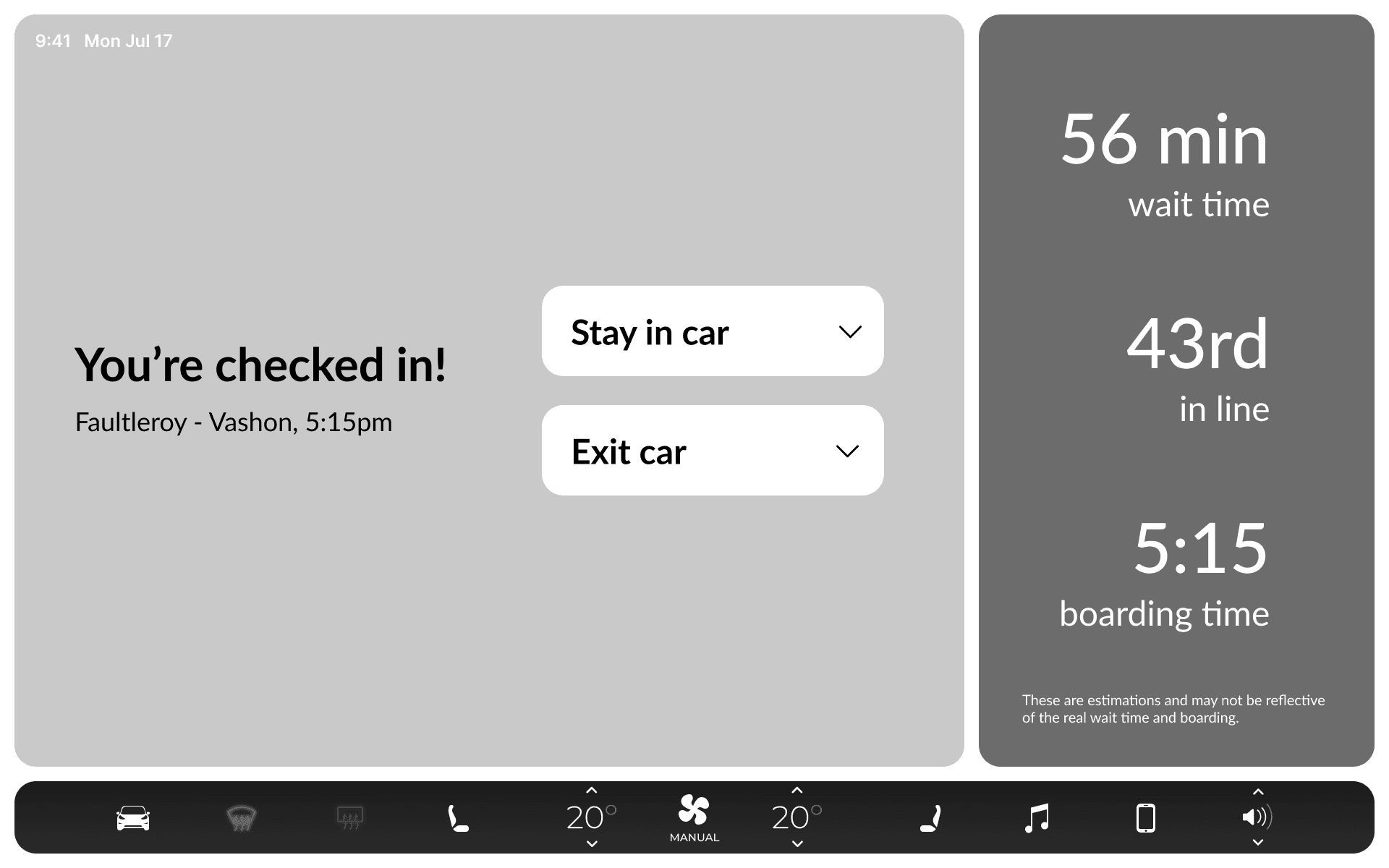
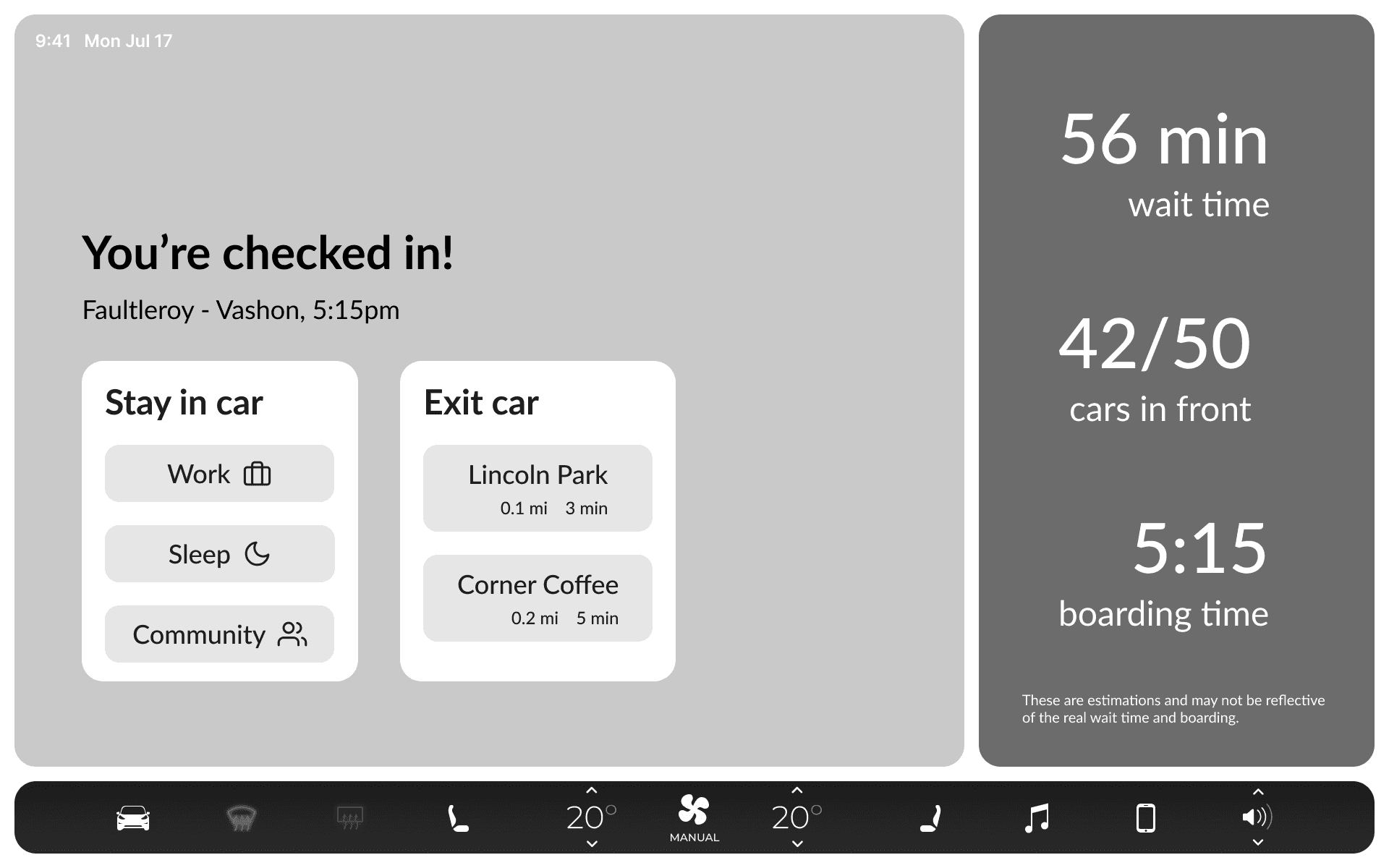
I owned the Spending Wait Time feature, which allows passengers to customize how they spend their wait time
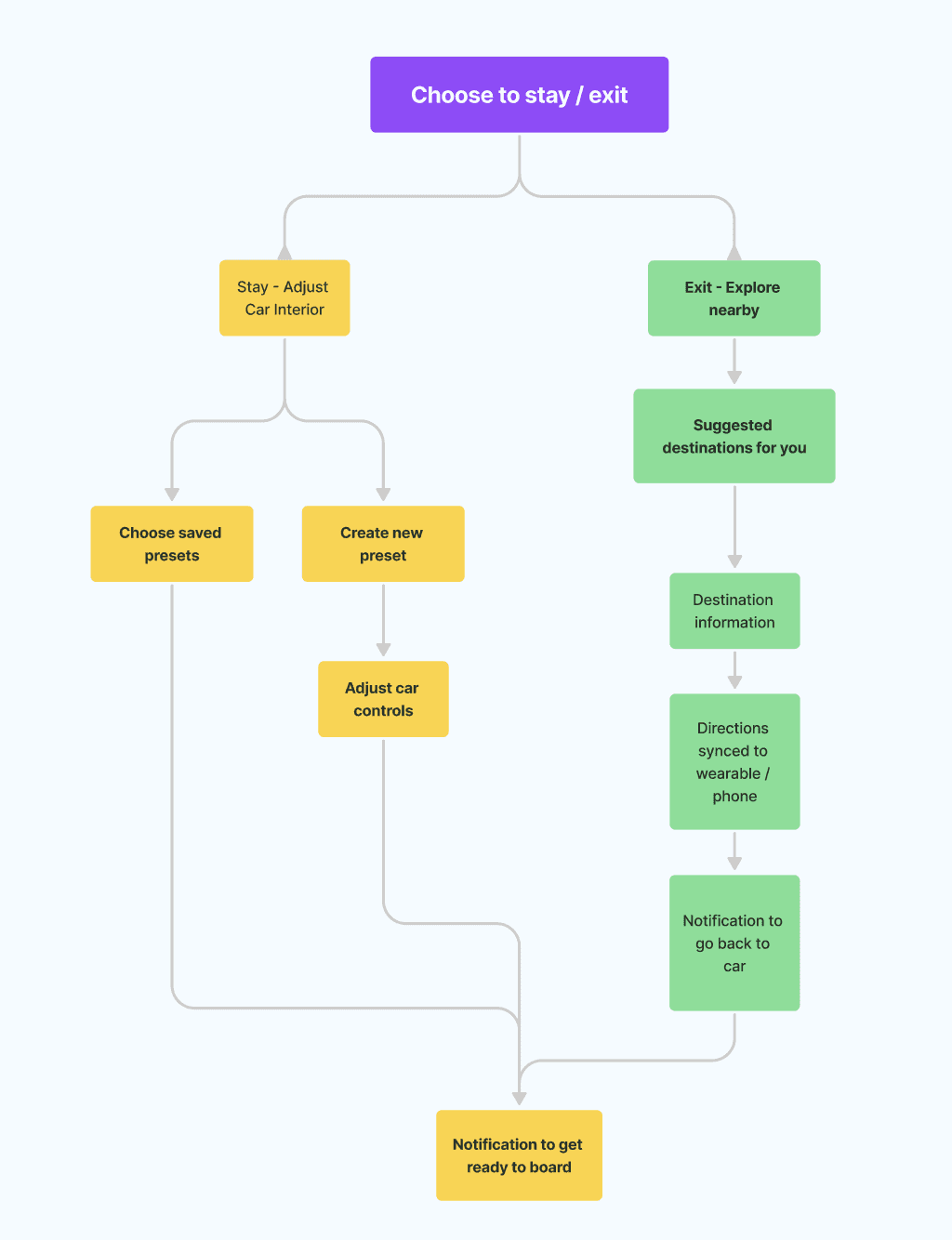
We organized Stream into 3 main features - I took charge of the “spending wait time” feature and mapped out its information architecture.
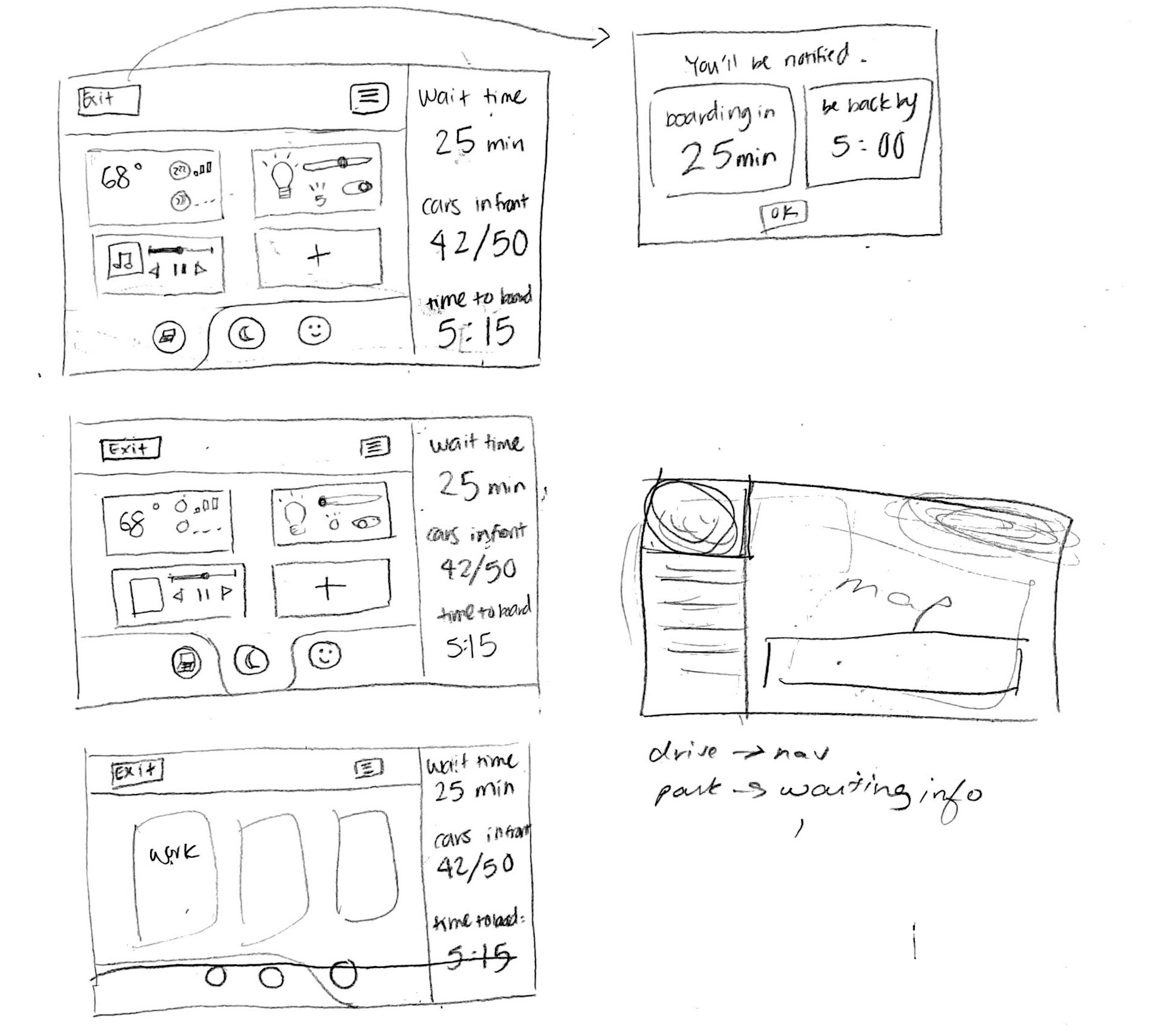
I started my wireframing process with sketching. Since it was my first time designing for an HMI, I looked into existing conventions to gain an understanding of the screen proportions.
Visual Identity
Curating Stream's visual identity based on our design principles and the magic of taking the ferry
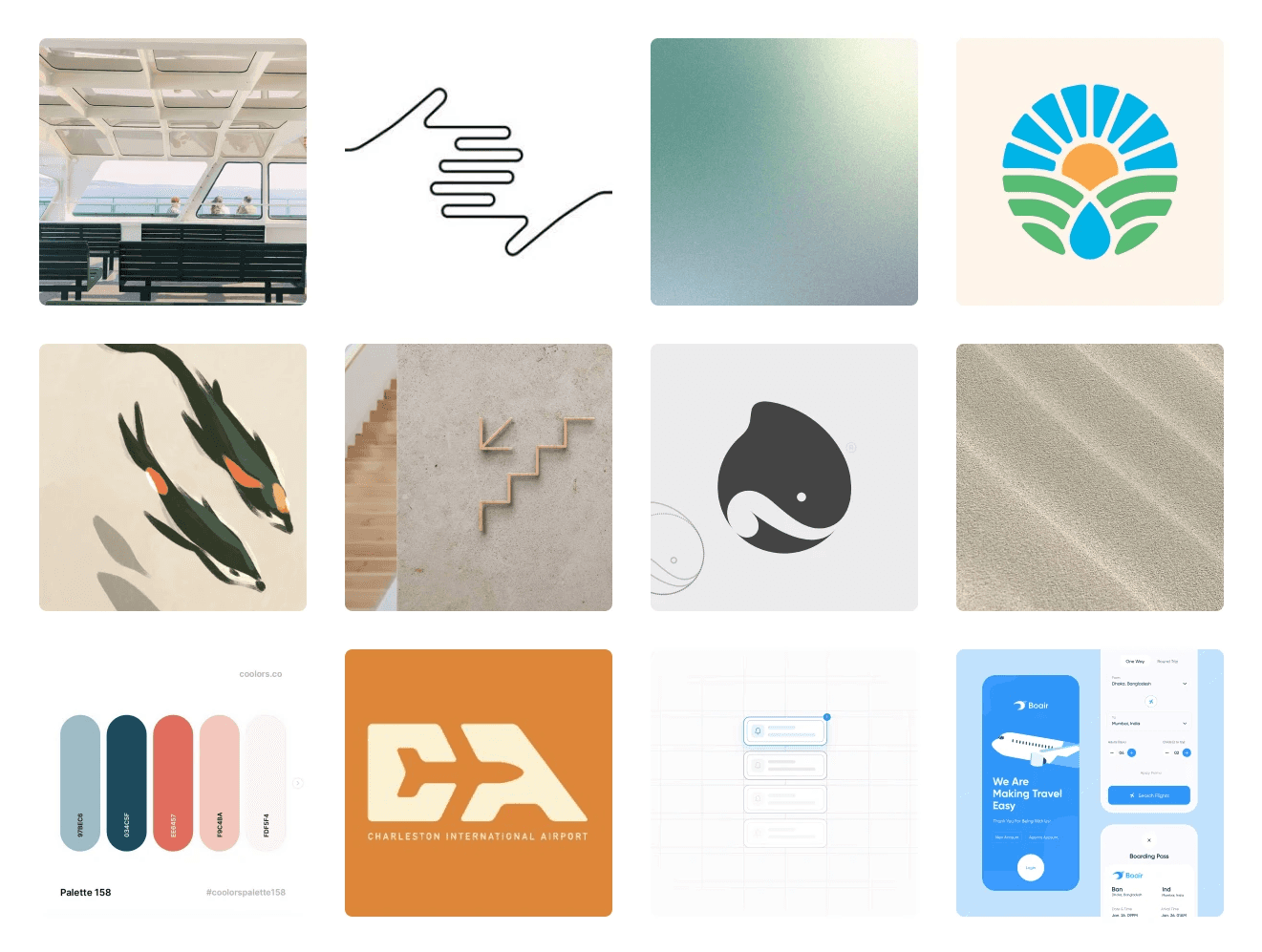
First, we gathered inspiration to form a moodboard.
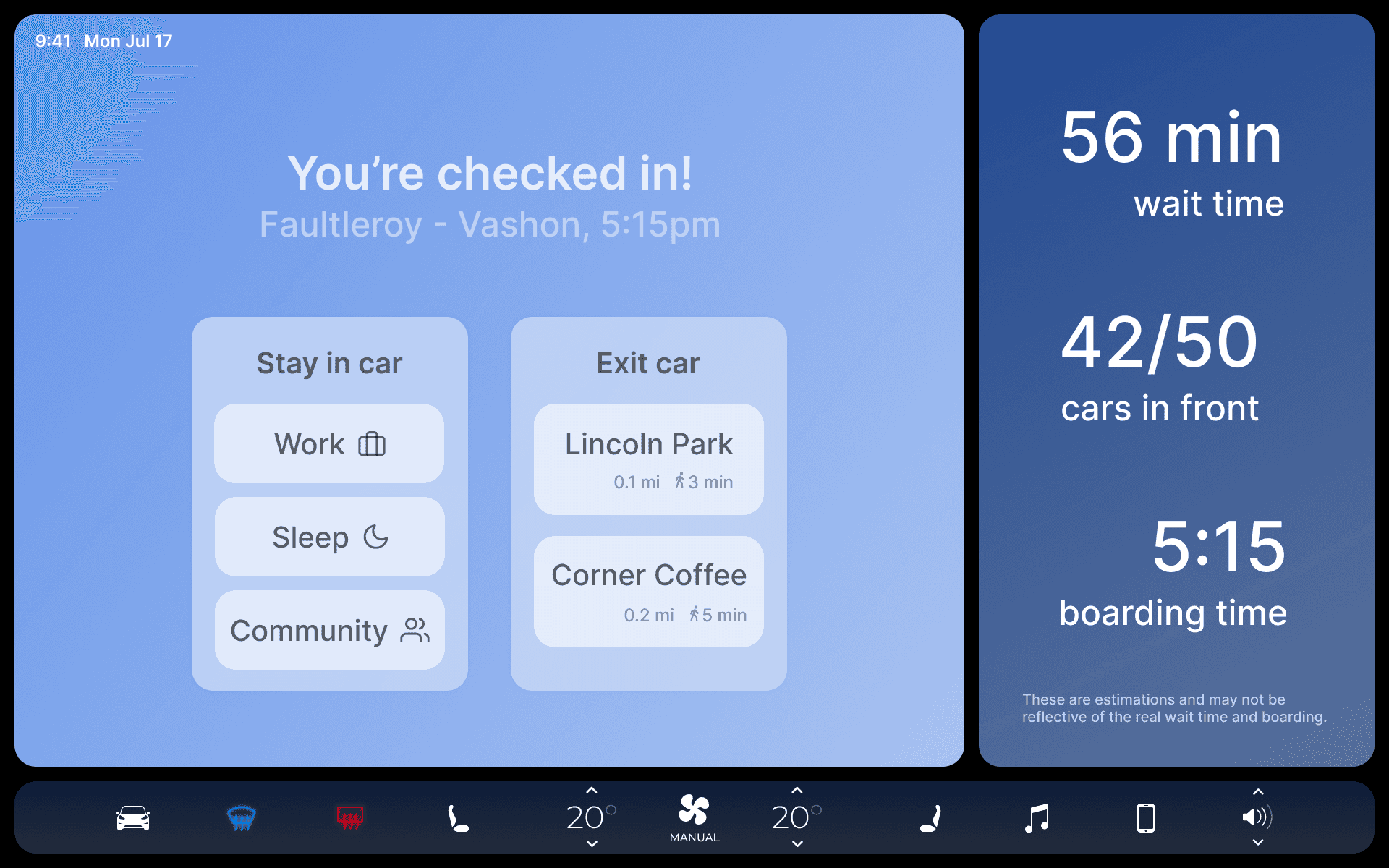
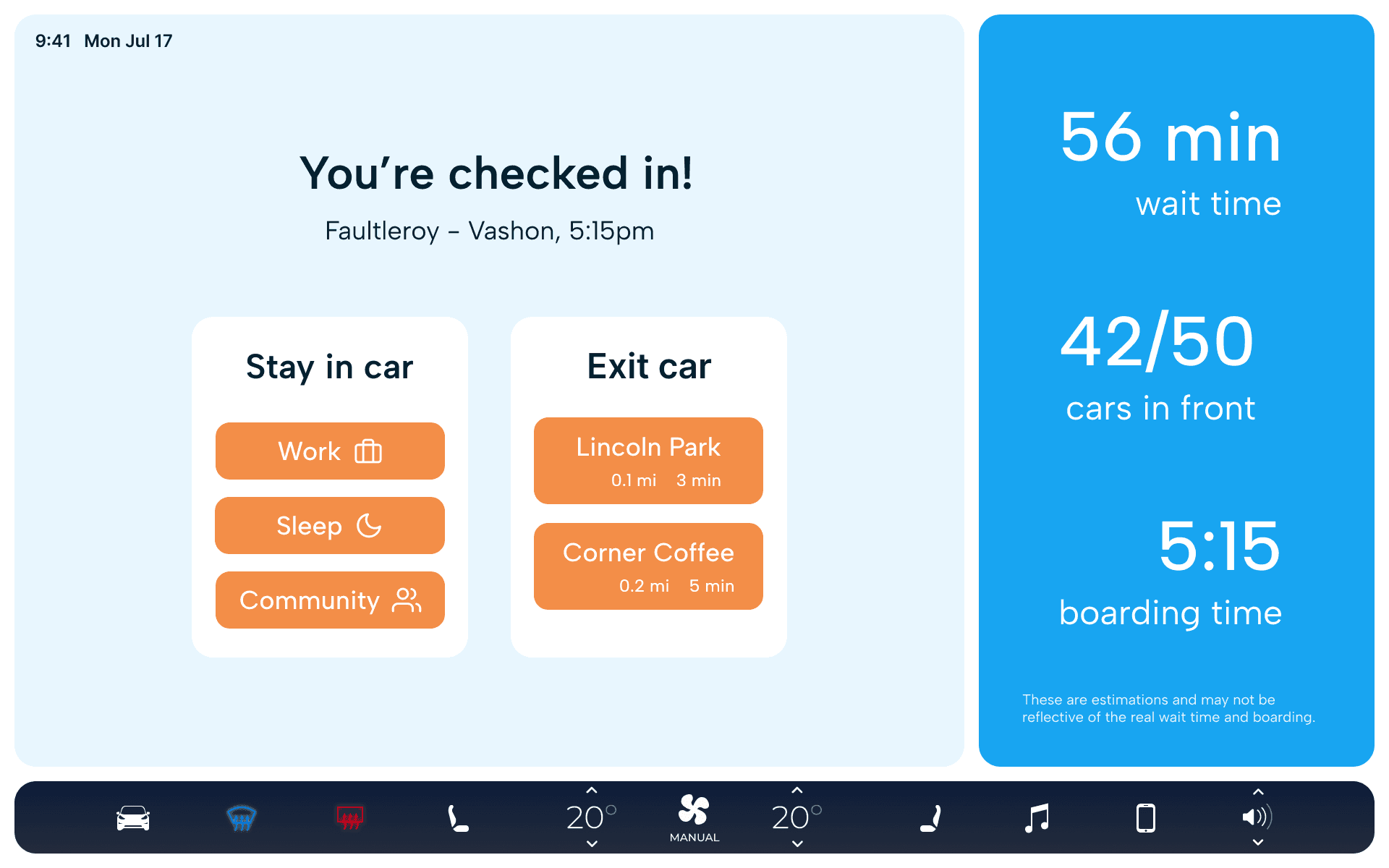
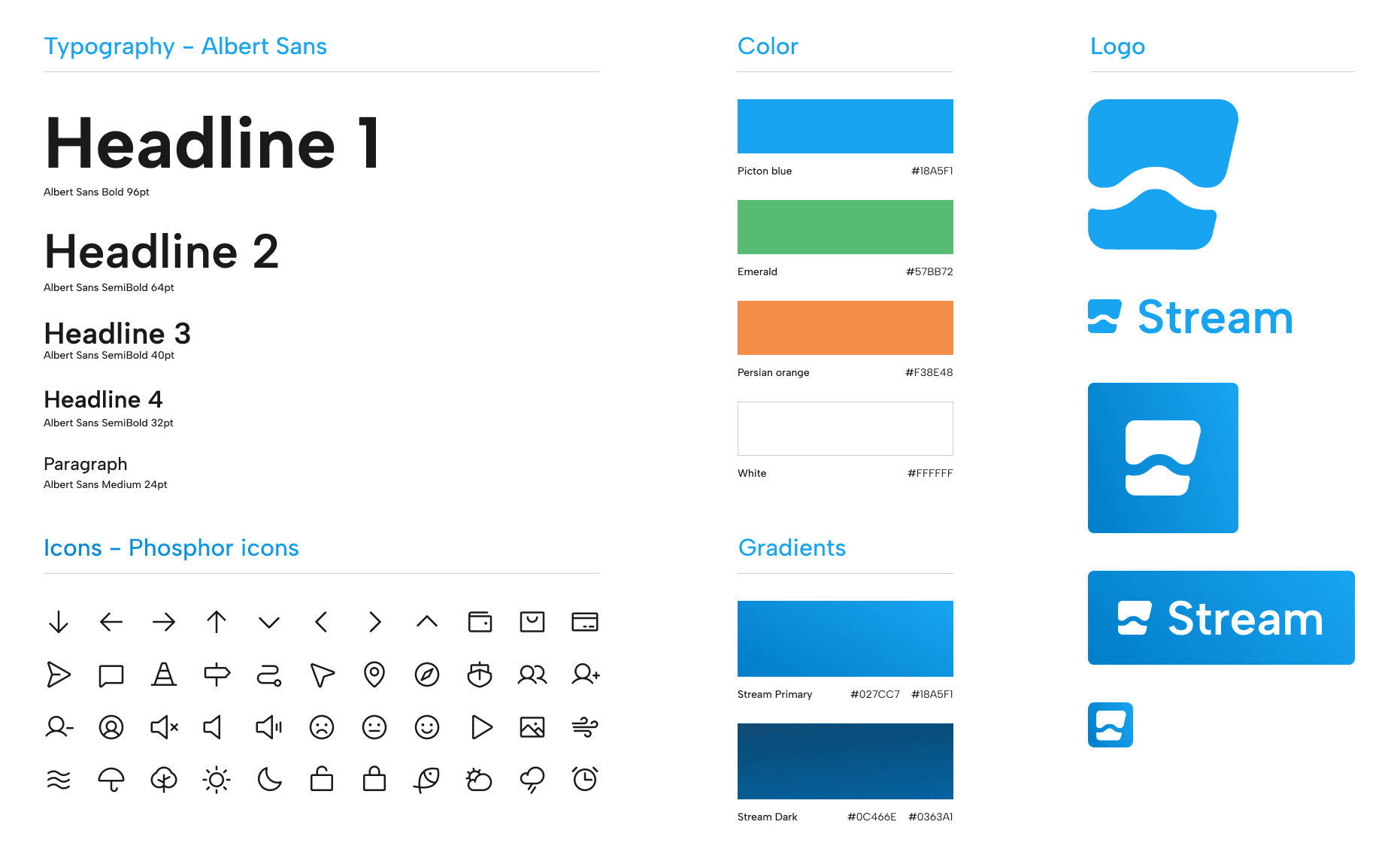
I knew I wanted to use blue as an homage to the Puget Sound, so I explored different color combinations and fonts simultaneously while experimenting with different UX to capture the right look that communicated all of our design principles.
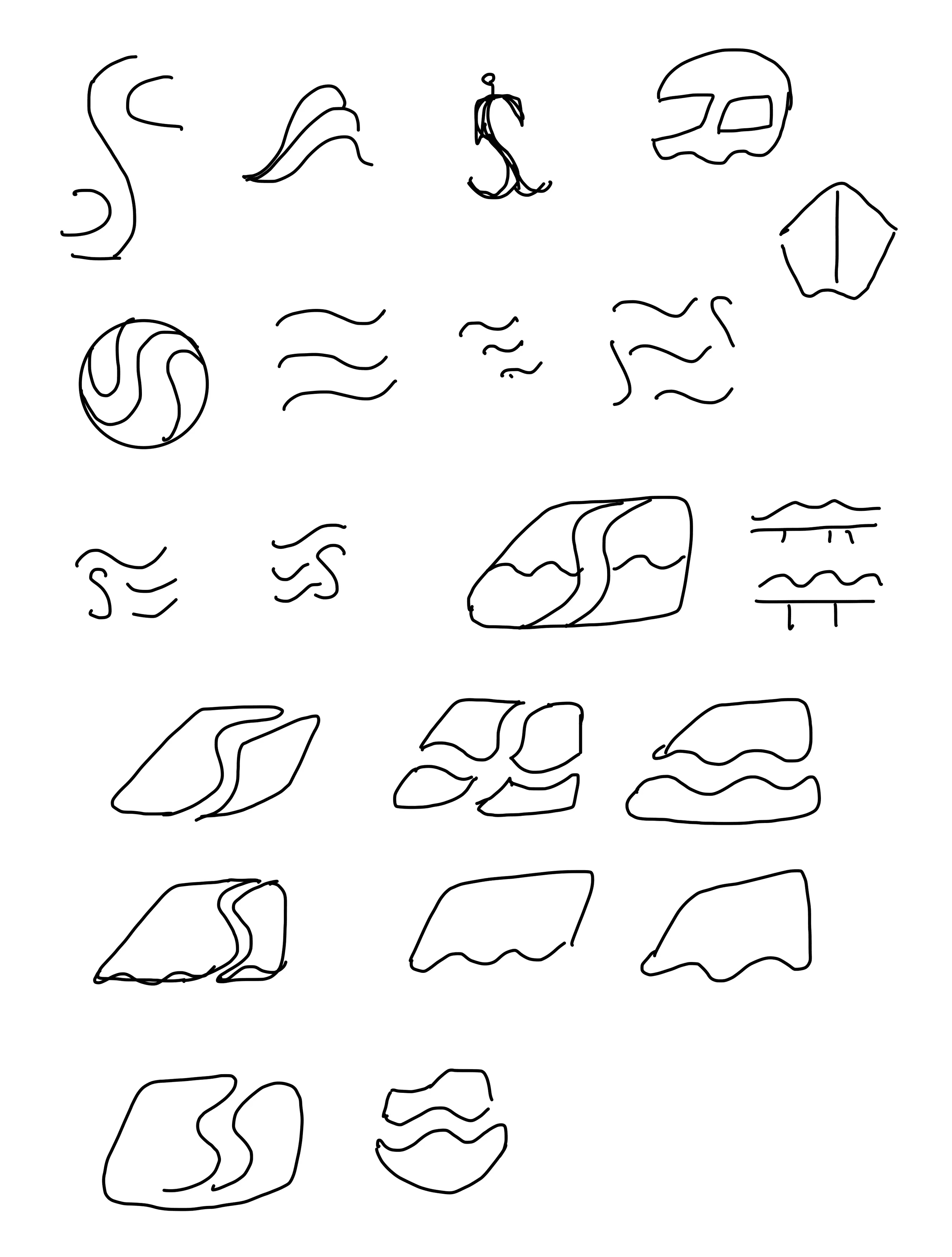
I then designed Stream's logo taking inspiration from the ferry and water.
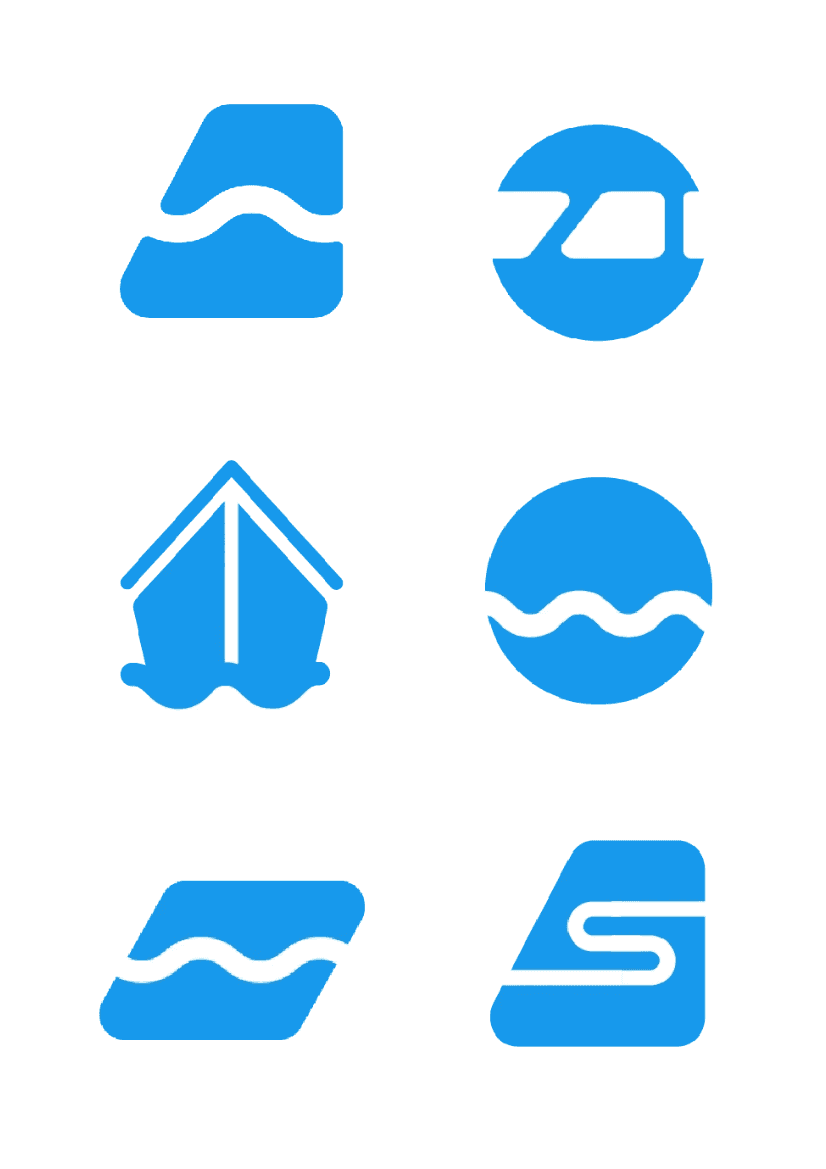
The final logo abstracts the shape of a ferry with a wave through the middle to represent the stream of ferries that travel through the Puget Sound.
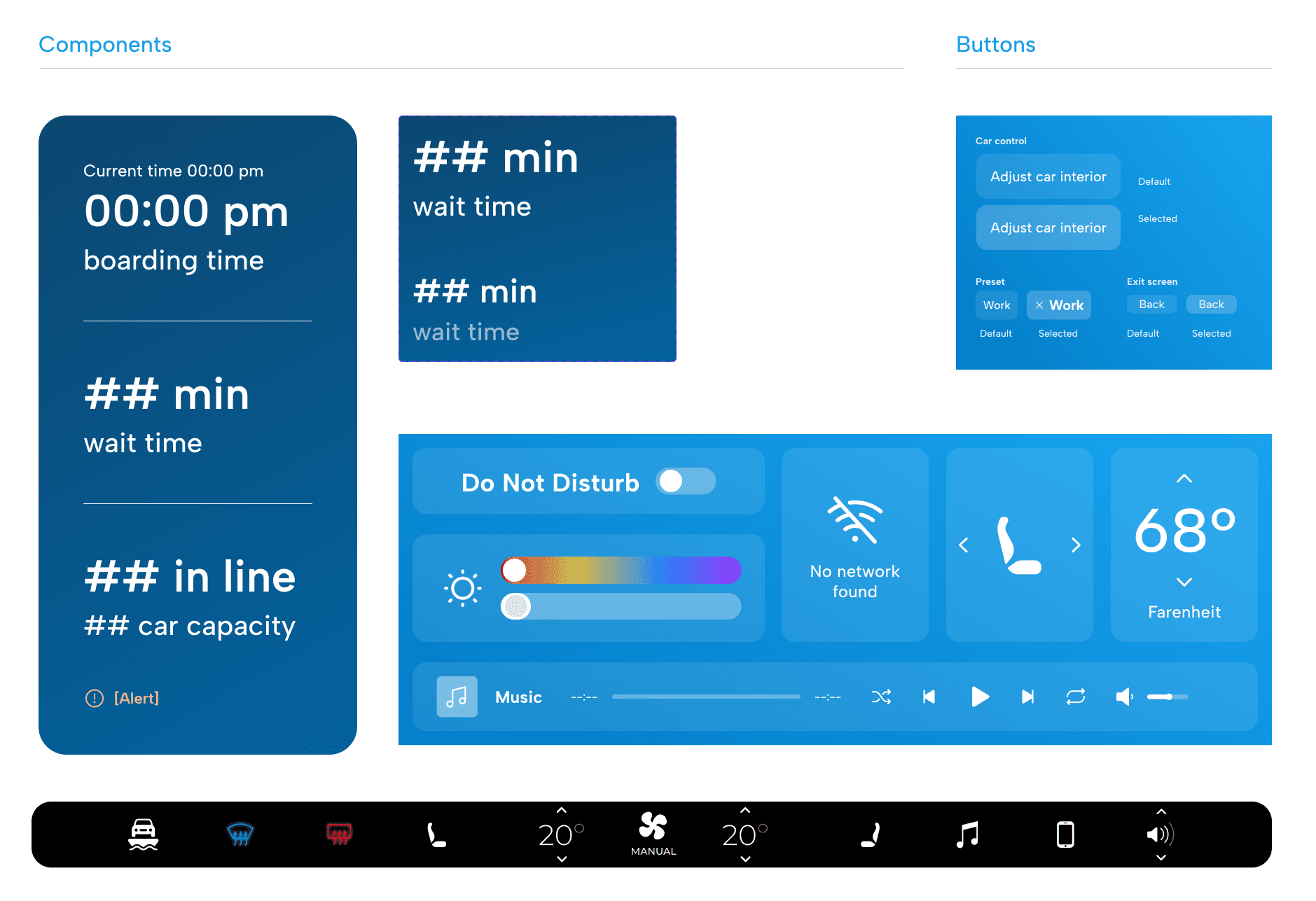
The below colors, gradients, fonts, and components became the visual identity & design system of Stream to communicate its reliability and support its information relay.
Final Screens
Introducing Stream, the digital ferry service that provides accurate metrics on ferry schedule and wait time, providing timely notifications and transforming the boarding system.
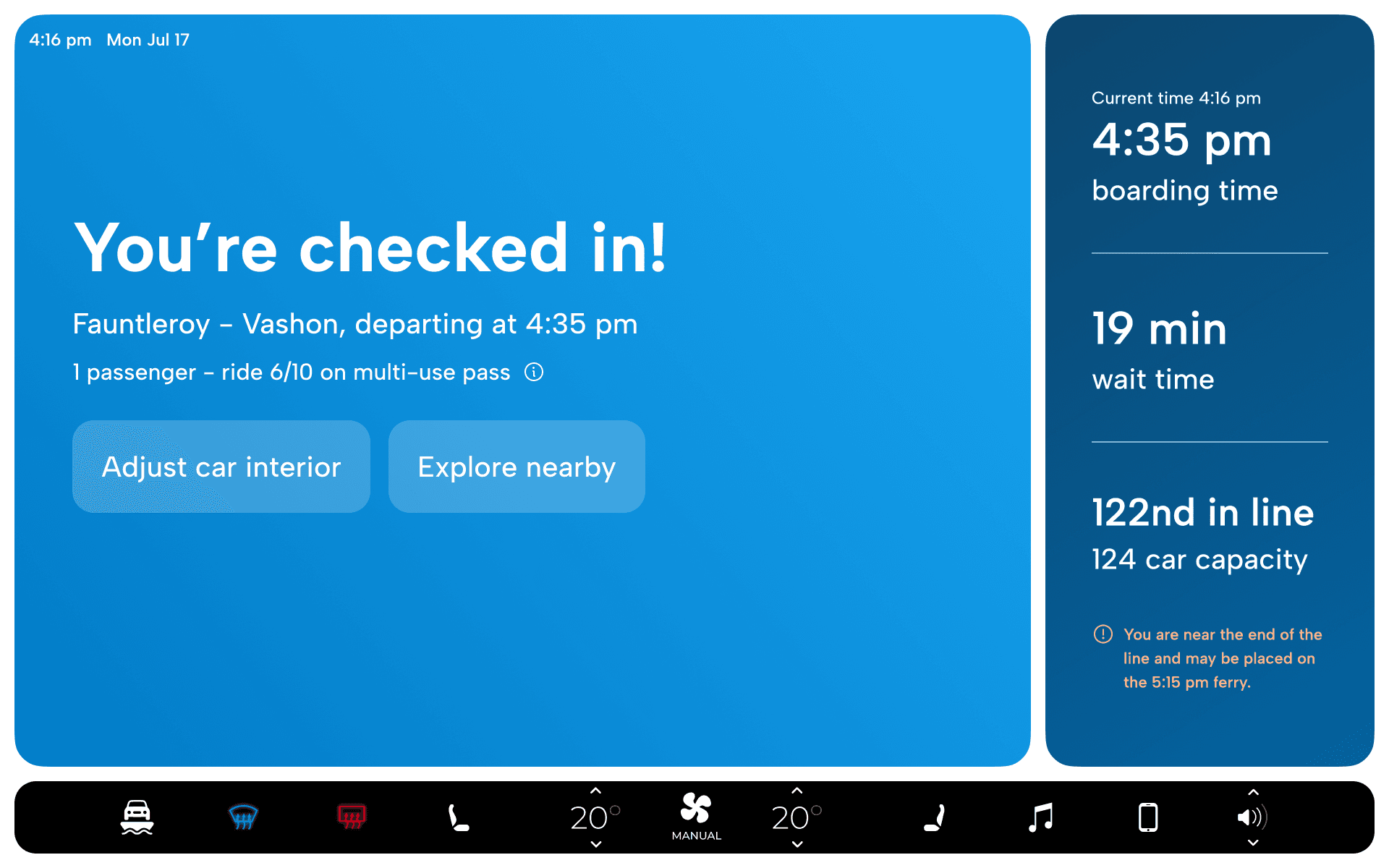
After arriving to the ferry terminal, check in with Stream.
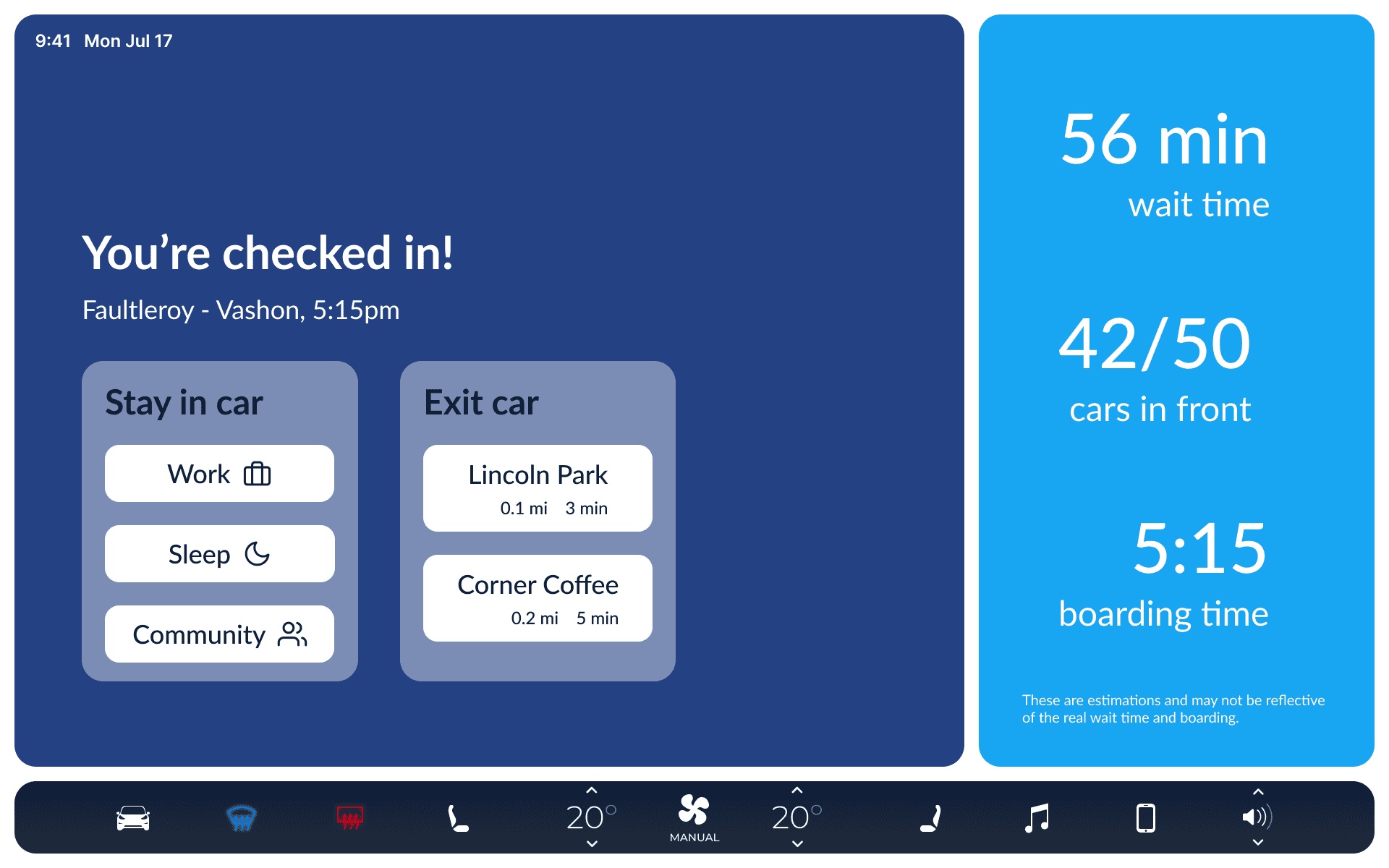
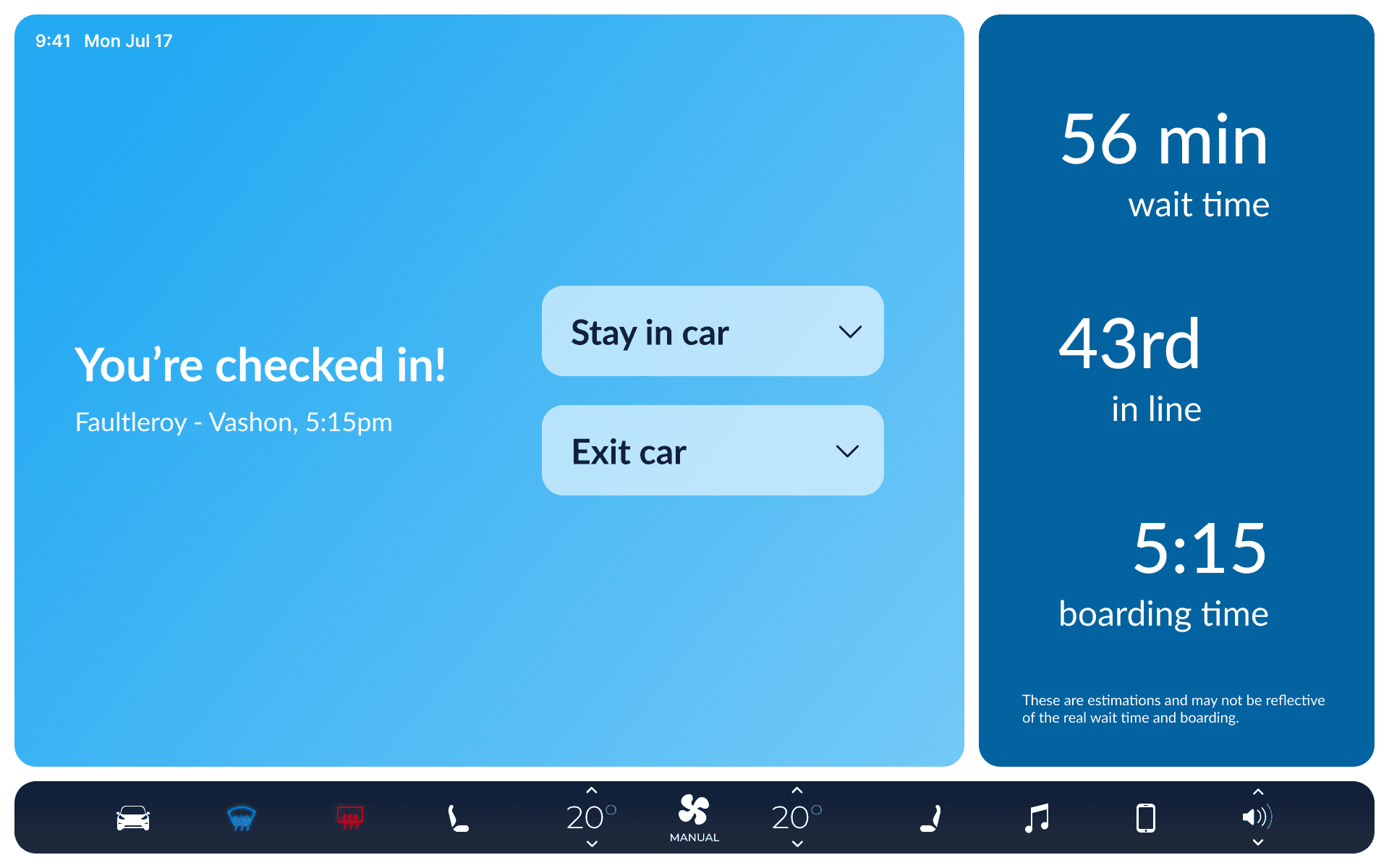
Prompted through a geofence at ferry terminals, checking in allows Stream to calculate the wait time and ferry car capacity based on cars that have checked in, location of cars, and size of cars.
Decide how you spend your wait time by adjusting your car interior to suit your needs.
If you decide to stay in your car, you can adjust your car environment by saving presets and setting up with one click.
Or, explore nearby suggestions based on your location.
If you want to enjoy some fresh air, Stream provides nearby suggestions based on the exact location of your car and its place in line. Once you choose a destination, directions will sync to your phone and Stream will notify you when it's near time to board.
Get notified to prepare for boarding.
Whether you're in your car or away from it, Stream pushes timely notifications to prepare you for boarding.
Outcome
As technology advances, Stream holds value for ferry systems beyond WSF
As a digital service for a ferry system, Stream can be projected to integrate into ferry systems with drive on capacity beyond WSF keep passengers informed throughout their trips.
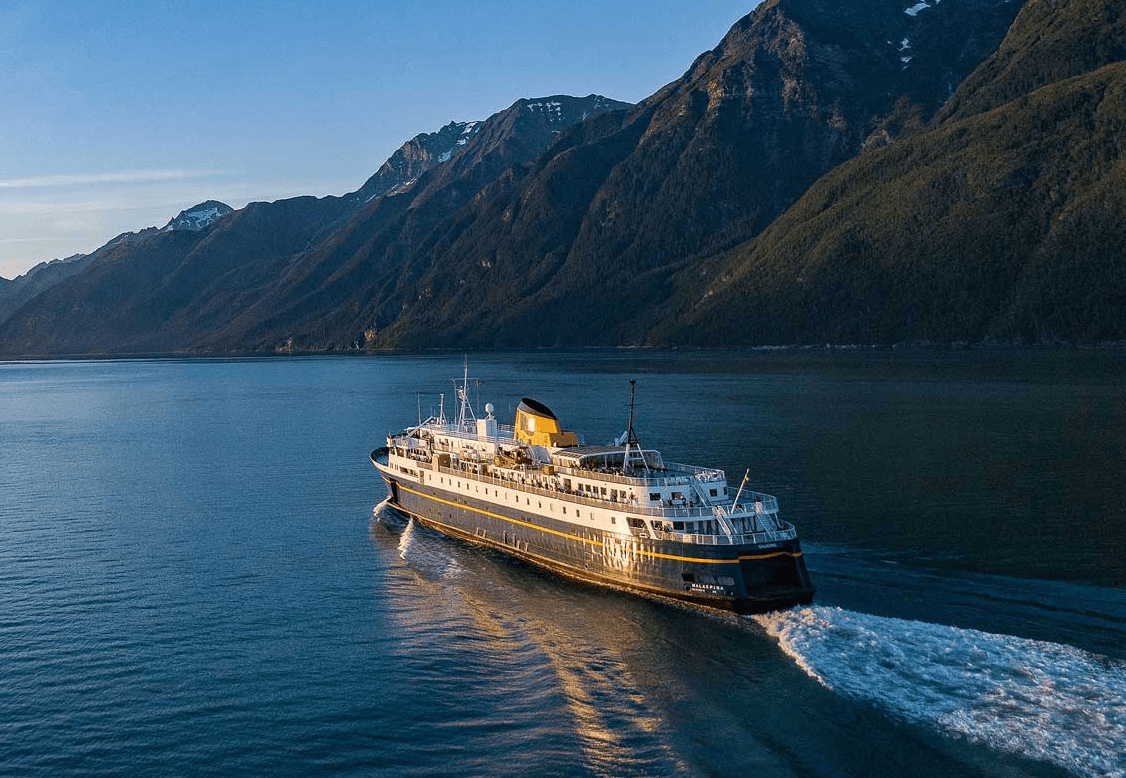
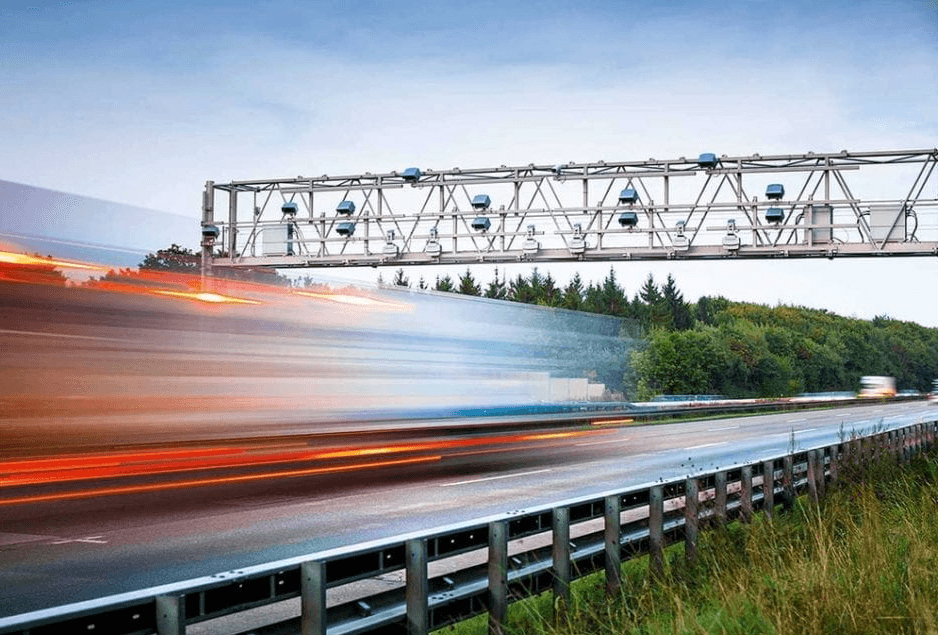
We designed Stream with the advancement of Electronic Toll Collection in mind, so that as it becomes more common Stream would be easier to implement and accommodate to the technology.
Next Steps
What's next for Stream?
User testing with ferry passengers
We didn't have time to test with real users in the timeframe of the project, so our first step would be to validate our design with users.
Community feature
We think it would be fun to add a feature which would connect passengers with one another to spend and enjoy their wait times together.
Multi-modal design
Though we focus on screens for this project, it would be interesting to explore how different sounds and haptics would play along with Stream.
Continuous iterating
Stream will never be finished and done with - we will continuously iterate this project to bring joy to ferry riding!